

In this guide
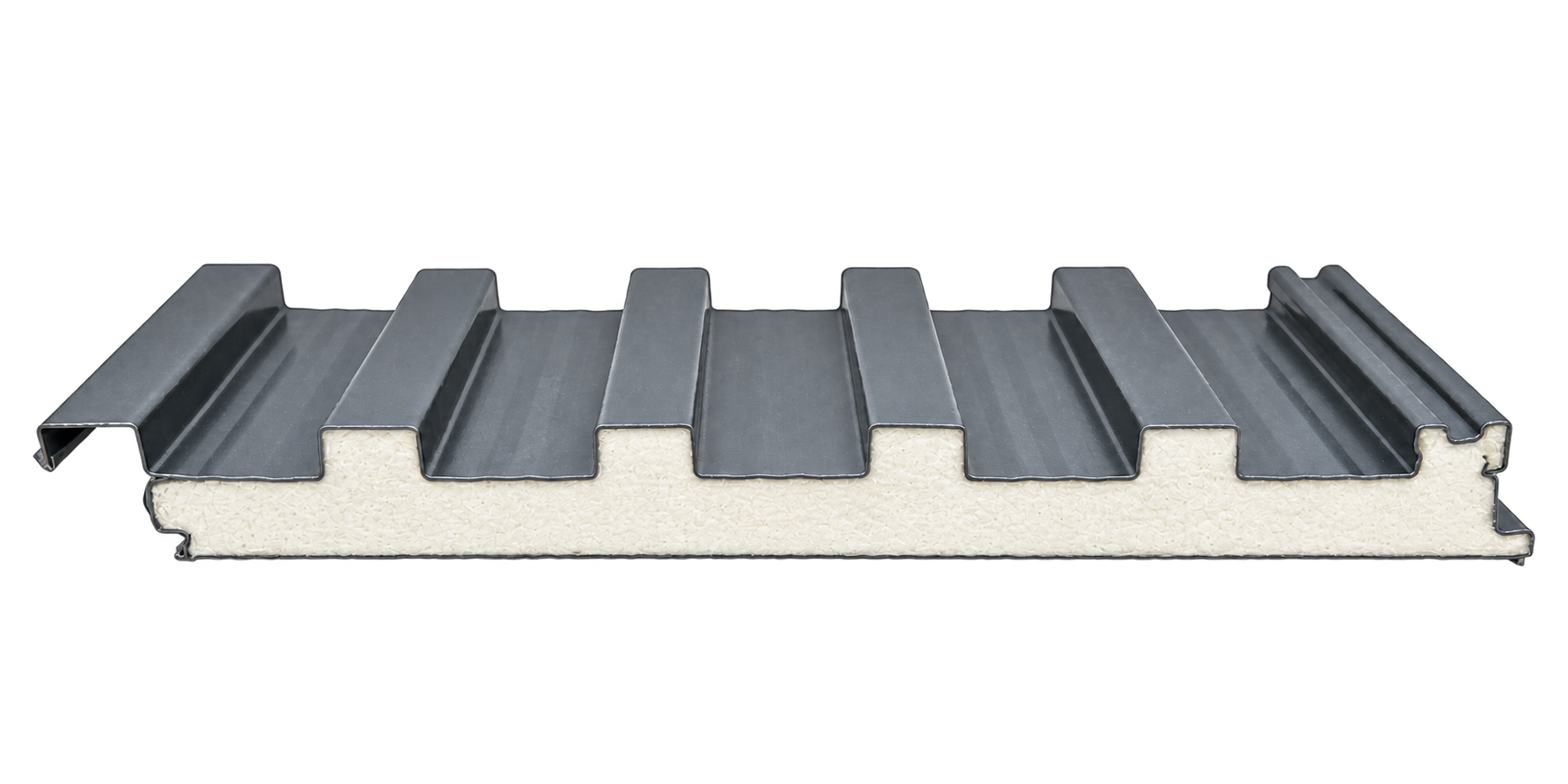
Describe both faces
External and internal skins have different exposure conditions and may have different thicknesses. Example configurations include 0.5/0.4 mm and 0.6/0.5 mm. State each face explicitly in the order, together with alloy and coating.
Read the notation carefully
A slash can separate top and bottom values in a quotation. Parenthesized numbers in the product catalogue must retain their original labels until their measurement basis is confirmed; do not silently convert a value within one face's specification into the opposite face's thickness. Specify whether thickness refers to base metal or coated material.
Thickness is not a complete structural specification
More demanding exposure may call for a different skin configuration, coating or fixing system. Do not treat thicker metal as permission to walk on the roof, increase spans or omit wind-load checks. Submit the full assembly for the relevant project assessment.
Thickness terms used in purchasing
| Term | Meaning |
|---|---|
| Top / Bottom | External roof face / internal underside face |
| 0.5 / 0.4 mm | Top 0.5 mm and bottom 0.4 mm when written as a top/bottom pair |
| BMT | Base Metal Thickness: the aluminum substrate excluding coating |
| TCT | Total Coated Thickness: substrate plus the coating layers |
GMiSU quotation basis
GMiSU quotations use BMT as the thickness basis. Record the base-metal thickness for each face, the agreed tolerance and the coating separately. Include these labels in the signed specification so coating thickness is not mistaken for additional aluminum.
Confirm the right panel and specification with GMiSU.
Send your drawings, dimensions, quantity, color, destination and target schedule for project-based recommendations.