

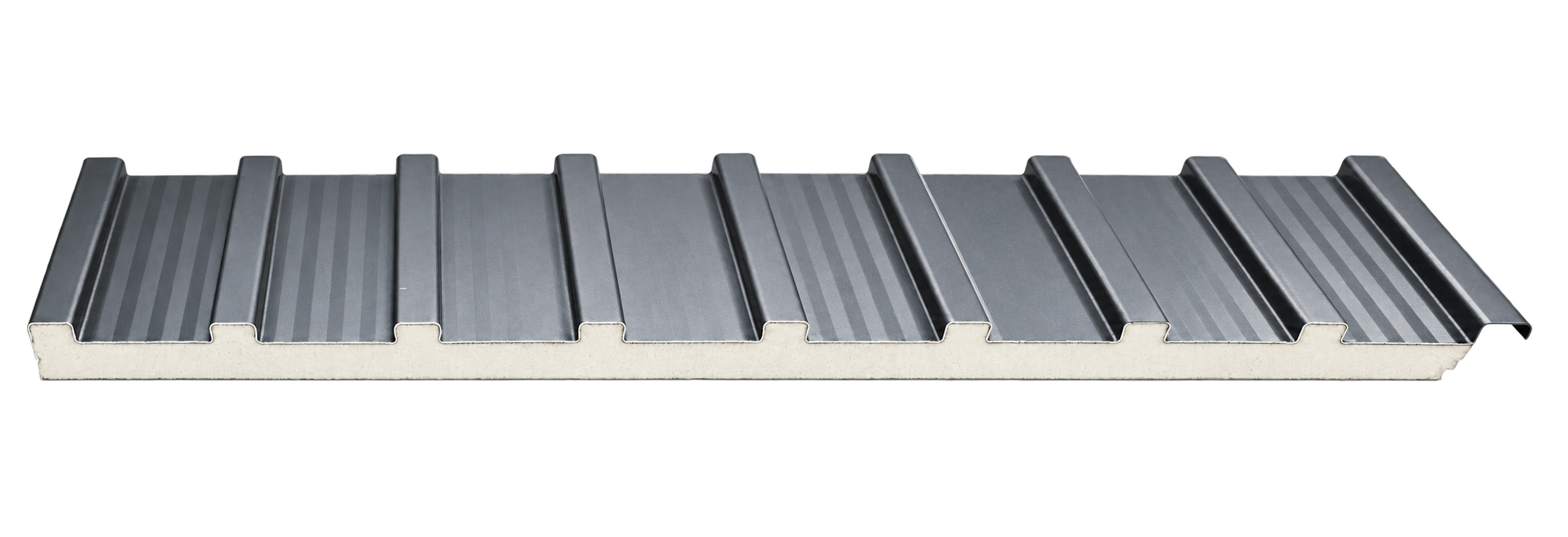
GMiSU insulated aluminum roof panels are sandwich panels with aluminum faces and a rigid polyurethane (PU) core. The core provides insulation; the complete profile, joints, supports and accessories determine how the panel fits a roof project.
In this guide
What is an aluminum-faced PU sandwich roof panel?
A sandwich panel brings an outer face, an insulation core and an inner face together in a factory-made component. For GMiSU roofing products, both metal faces are aluminum and the standard core is rigid polyurethane. Buyers may also use the British spelling, insulated aluminium roof panels, for this material category.
The aluminum faces provide the exposed roof surface and underside finish. The foam layer reduces heat transfer through the panel. Aluminum on its own is not the insulation: a single aluminum sheet and a polyurethane sandwich roof panel are different constructions, even if their visible colors are similar.
The finished panel is one part of the roof. A weather-resistant assembly also needs compatible joints, a suitable slope, flashings, drainage, fasteners and a supporting frame designed for the project.
Similar product names can describe different materials
| Material | What to check | How it differs |
|---|---|---|
| Aluminum-faced PU roof panel | Both face materials, PU core, roof profile and connection detail | Combines aluminum faces with factory-integrated insulation |
| Steel-faced sandwich roof panel | Coated steel grade, coating, core type and roof detail | A similar sandwich format does not make steel and aluminum interchangeable |
| Single-skin aluminum roofing | Sheet profile and any separate insulation or ceiling layers | A single sheet does not include a factory-bonded insulation core |
| Aluminum composite cladding panel | Core construction and the manufacturer's intended application | An aluminum-faced cladding product is not automatically an insulated roof panel |
PU, PUR and other insulation cores
PU is a common abbreviation for polyurethane; PUR is also used for polyurethane foam. GMiSU's standard product uses a rigid polyurethane core. Do not assume that a panel described simply as a sandwich panel has the same core: EPS, mineral wool and other foams describe different constructions.
A custom core formulation requires its own supply confirmation and applicable documentation. A fire result or thermal value from another core, thickness or manufacturer's panel must not be transferred to the product being quoted.
Read dimensions in the right order
- Overall depth
- The 45 mm and 65 mm names describe the overall profile depth, not an independently measured uniform foam thickness.
- Core depth
- Their valley-area nominal design core thicknesses are approximately 20 mm and 40 mm respectively. Compare like-for-like skin and coating specifications.
- Effective coverage
- The two large-format products cover 950 mm after joining. Use effective width, rather than the 1,000 mm overall width, for coverage calculations.
- Panel length
- Specify each cut length and sheet count, then coordinate roof geometry, packing and the unloading route.
Where can insulated sandwich roof panels be considered?
Typical project discussions include carports, patio covers, pavilions, sunrooms and industrial or commercial roofs. An open canopy prioritizes shade, drainage and the appearance of the underside. An enclosed air-conditioned room also needs the roof considered together with glazing, walls and ventilation.
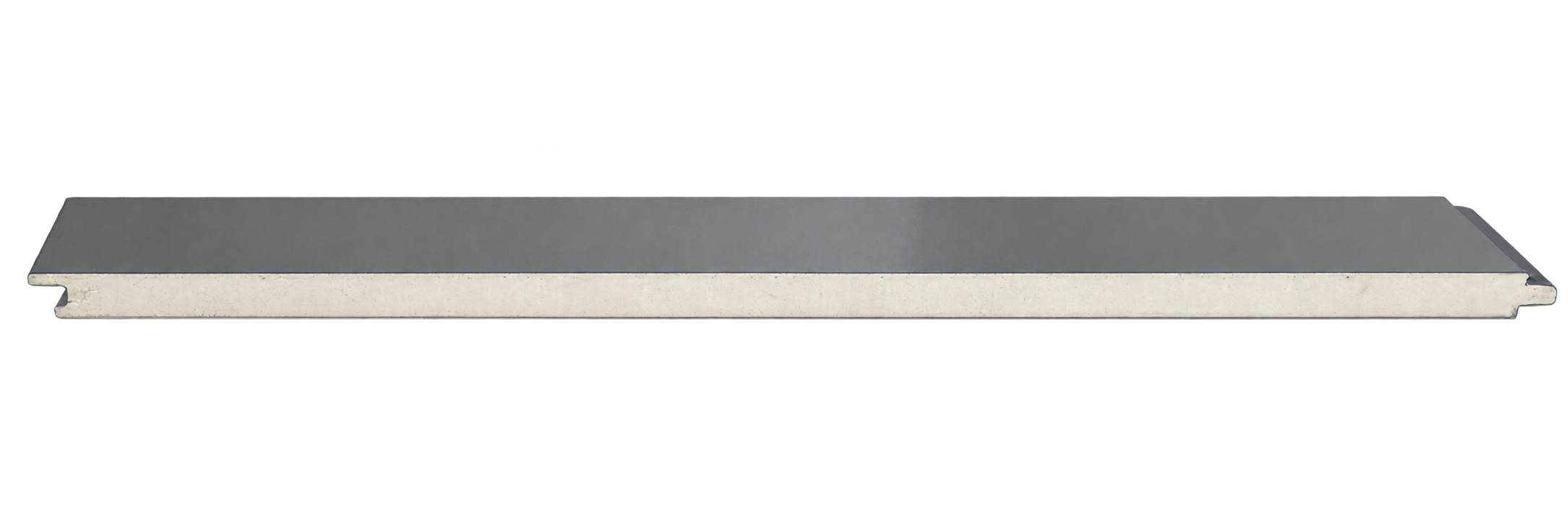
GMiSU offers the 45 mm × 950 mm Large-Format Panel, 65 mm × 950 mm Large-Format Panel, 35 mm × 333 mm Modular Panel and 33 mm Flat Insulated Aluminum Panel. Start with the application and roof layout, then compare these profiles. A flat panel face does not mean that a zero-slope roof is suitable.
Questions before specifying a panel
Are all insulated metal roof panels made with aluminum?
No. Insulated metal panels may have steel or aluminum faces and different cores. Confirm the material of both faces, the insulation core and the intended roofing application.
Does a thicker panel automatically meet local building requirements?
No. Project acceptance depends on the specified assembly, relevant test evidence, supports, connections and local requirements, not the model name alone.
What should I send to compare the four GMiSU products?
Send the building use, whether the space is enclosed, a dimensioned roof plan, pitch, support layout, preferred finish, quantity and delivery destination.
Roofing sheets, insulated panels and aluminum tiles
Insulated aluminum roofing sheets, double-layer aluminum roof panels and ribbed thermal-insulation aluminum tiles can be supplier descriptions of metal-faced roof products. Confirm the cross-section rather than relying on the name: GMiSU's standard sandwich construction uses two aluminum faces and a rigid polyurethane core. The catalogue model identifies its actual profile and coverage.
A search for aluminum wall panels or energy-efficient cladding may instead refer to a facade product. Roof-panel information does not establish a wall-system approval. Likewise, PUR and a custom PIR formulation should not be treated as the same supplied specification without confirmation.
Confirm the right panel and specification with GMiSU.
Send your drawings, dimensions, quantity, color, destination and target schedule for project-based recommendations.